Credentials and client rating A new customer. An acquisition. A deadline. A key person leaving. Software enters the conversation when the business can no longer work around the constraint.
D/01→Growth
Growth should make the business stronger. Why is it making the operation harder to control?
When every new customer, site or service adds administration faster than capacity, the operating model has become the constraint.
D/02→Acquisition
You acquired a business. You also inherited every system holding it together.
The value in the deal depends on making two operations work together without flattening what made either one worth buying.
D/03→A new service
The market is ready. Your systems aren't.
A new offer can create advantage only if the operation can price, sell, deliver and measure it before the opportunity passes.
D/04→A major customer
Winning the account is only half the risk. Can the operation keep the promise?
A strategically important customer can justify change, but a hurried workaround can become the most expensive account the business serves.
D/05→Margin pressure
Your margin isn't disappearing in one place. It's leaking between systems.
Repeated entry, late decisions, errors and manual reconciliation create an operational tax that standard reports rarely expose.
D/06→Regulatory change
The rules changed. Your accountability didn't.
New evidence, control and reporting requirements expose systems that cannot explain what happened or change at the required pace.
D/07→A key person leaving
When they leave, what leaves with them?
A resignation or retirement exposes the rules, exceptions and recovery knowledge the company never made part of the system.
D/08→Vendor end-of-life
The system has an expiry date. Your operation doesn't.
A withdrawal of support turns a tolerated dependency into a deadline and forces the business to decide what should replace it.
D/09→Systems that won't cooperate
You bought the tools. You're still doing the joining up.
When information crosses systems through people, the operation inherits delay, ambiguity and failure nobody can see end to end.
What changed in production
Operational constraints turned into capability.
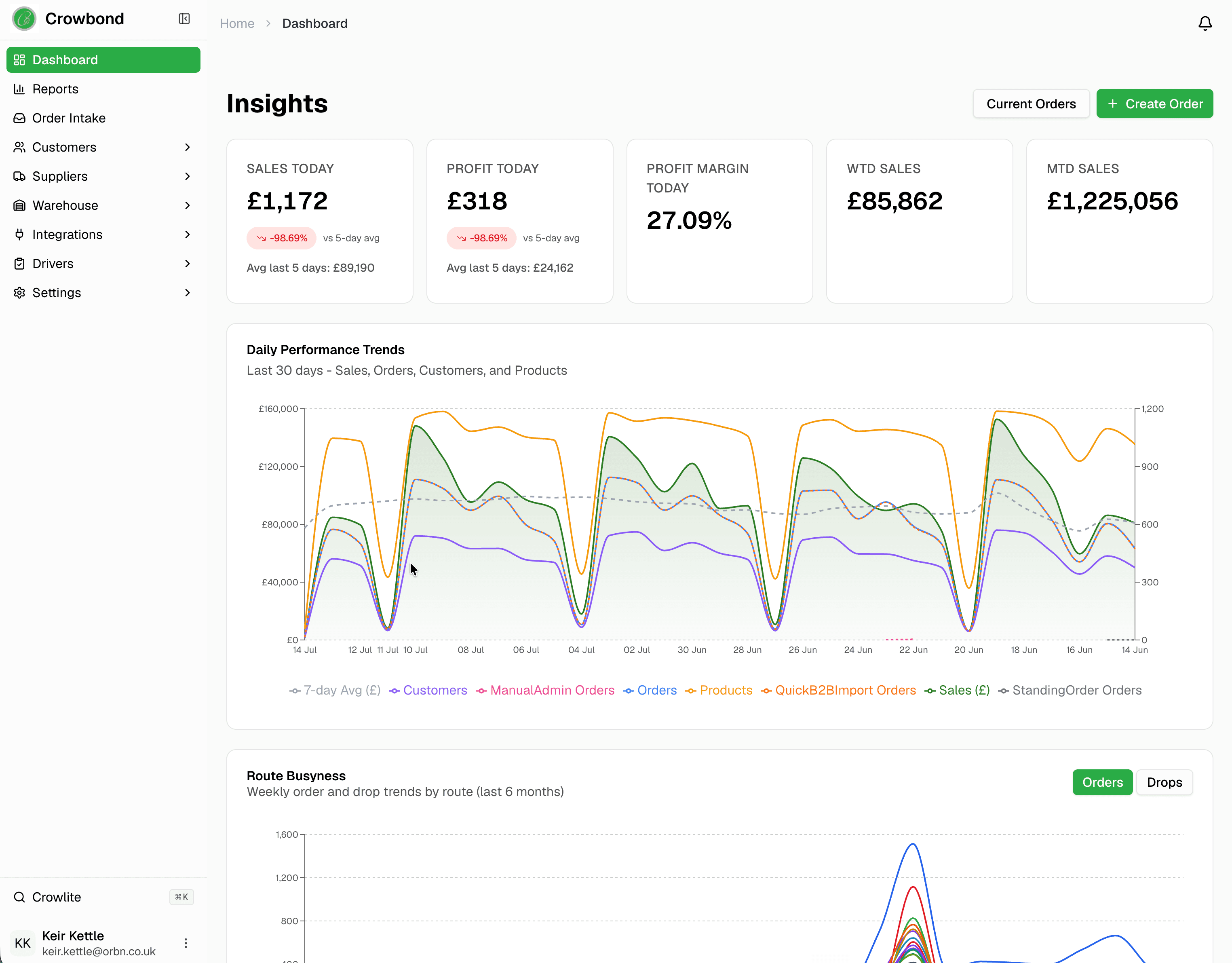
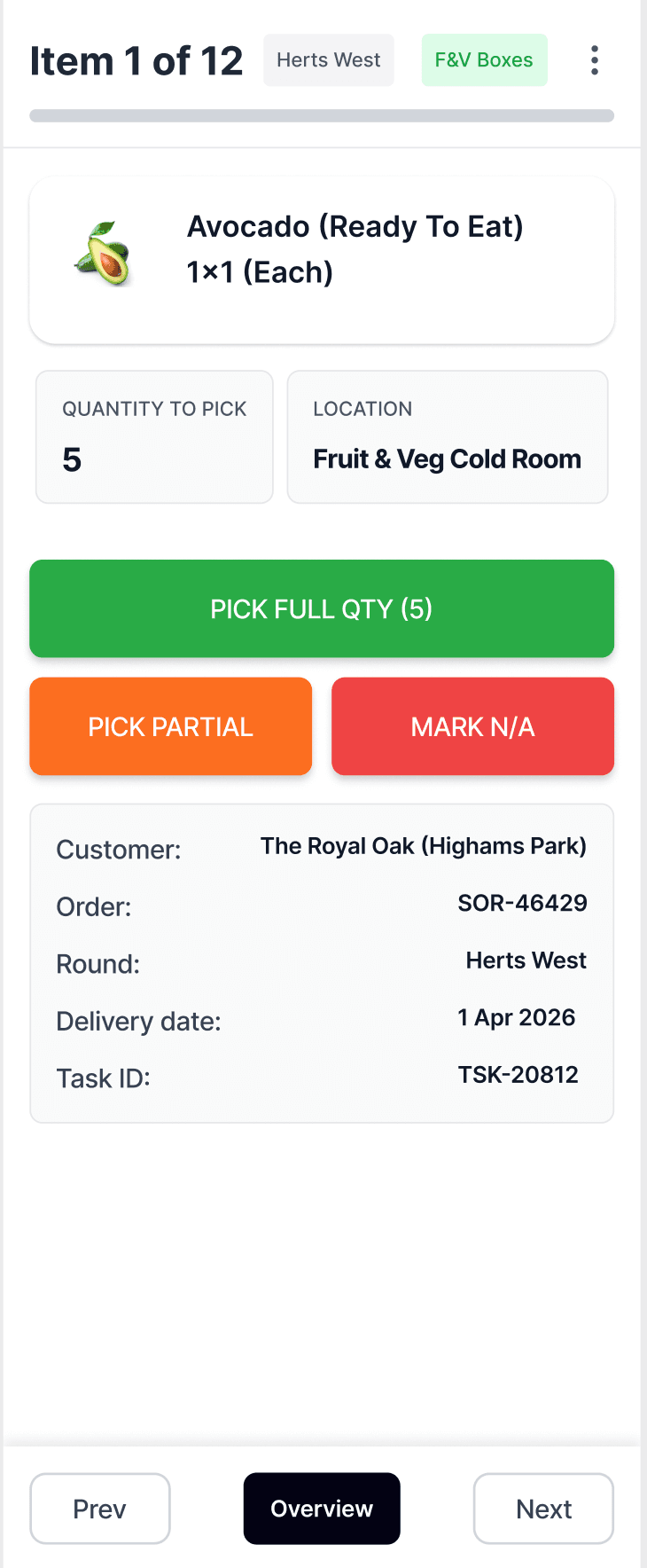
W/01 — W/02W/01Crowlite
Foodservice wholesale ERP and warehouse picking appGrowth had turned orders, warehouse work and route planning into daily coordination. Crowlite connected the operation around the way Crowbond actually fulfils an order. One planning bottleneck fell from as much as eight hours to under 20 minutes, with more than £36,000 in reported annual savings.
ERPWarehouse pickingRoute planningB2B ordering
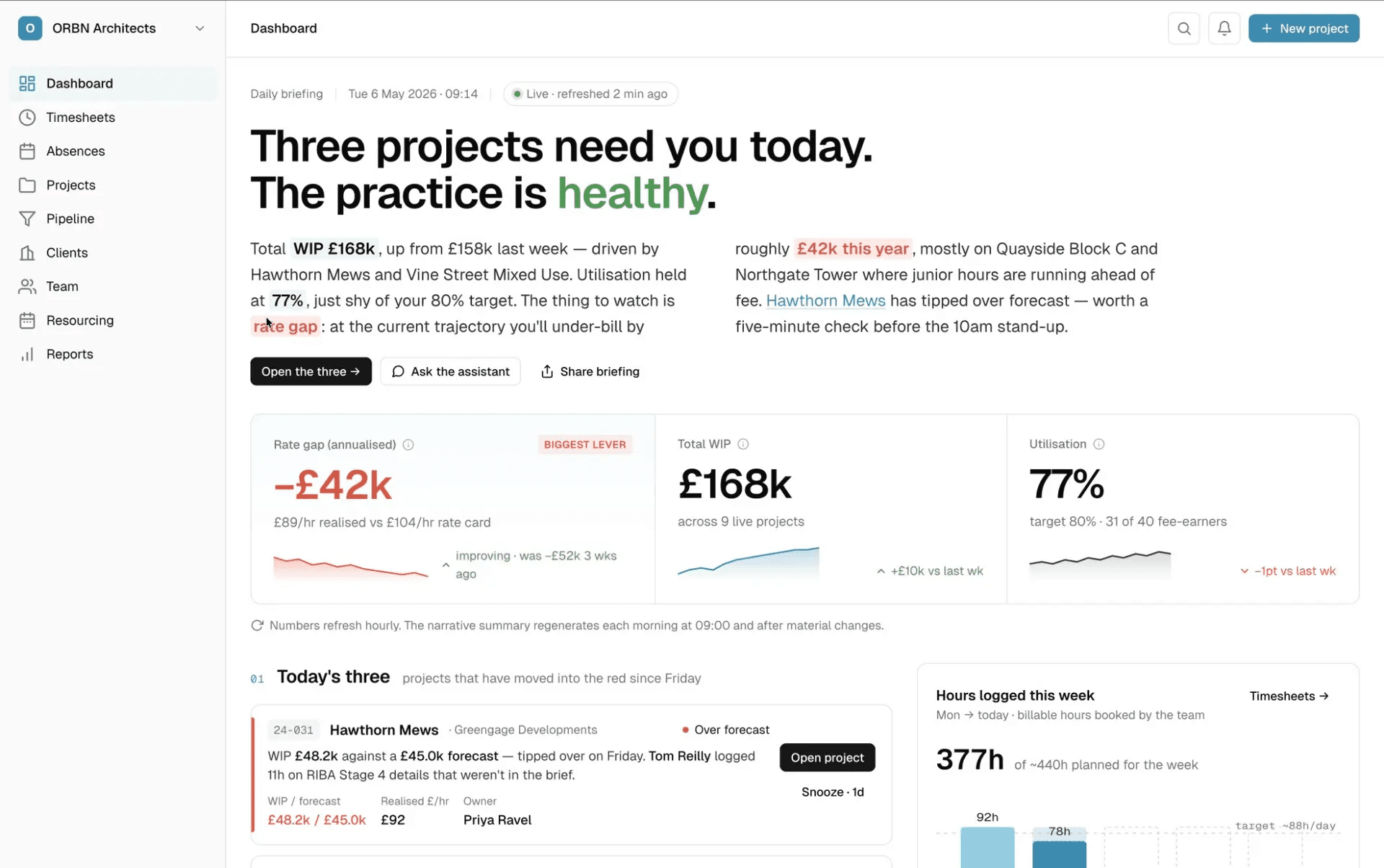
W/02DeskBook
AI practice management for architectsMargin leakage was being discovered after the chance to correct it. DeskBook brings project, time and rate data together, then flags the work moving beyond forecast. A plain-English morning briefing shows which jobs need attention and what the team should check before stand-up.
AI briefingsTimesheets & WIPResourcingReporting
Possible responses
Build is one answer. Not the starting assumption.
S/01 — S/06We help decide what should change, what should be bought or configured, what should connect and what the business has a reason to own.
S/01→AI Development
AI automation, document processing and forecasting built into the systems your team already uses.
S/02→Custom Software Development
Web, mobile and operational software for the rules, decisions and services your business has a reason to own.
S/03→Data Strategy
Turn scattered operational records into clear, dependable decisions.
S/04→Systems Integration
Connect ERP, WMS, ecommerce, EDI and legacy software with data flows your team can monitor and recover.
S/05→Cloud-Native Application Development
Secure, scalable AWS applications built in your environment, with the controls and support needed to run them.
S/06→Legacy Software Modernisation
Recover control of critical legacy software, then stabilise, integrate, migrate or replace it in controlled stages.
What the business should own
Own the decisions that make you different.
01 — 0401Keep control of the risk
When an important system fails, your customers and regulators still hold you accountable. The people carrying that responsibility should be able to audit the system, explain what happened and fix it without waiting for a vendor.
02Codify the knowledge that sets you apart
Your most valuable IP may be how Tuesday morning works: the rules, exceptions and judgement that keep the operation effective. Packaged software is useful where the work is standard. It should not flatten the knowledge that creates the advantage.
03Make the systems work together
Most organisations already have several systems. The problem is the gaps between them. We design those connections deliberately so the operation works as a whole.
ERPWMSPOSEDIAPIORBN
Explore API and systems integration → 04Change when the business changes
Regulations and policies move. The business grows in ways nobody predicted. With packaged software, change depends on the vendor roadmap. With a system you own, your priorities set the pace.
Modernise critical legacy software → How we work
You bring the operating knowledge. We carry it into production.
01Choose the right response
We begin with what changed, what is at stake and how the operation works. Then we test whether the useful response is process change, configuration, integration, modernisation or an owned build.
02Find the first useful release
The people who run your operation shape the system. We work alongside them to understand the rules, workarounds and exceptions, then choose the smallest release worth putting into production.
03Release in small steps
We put working software in users' hands early. Small, reviewable releases expose the difficult parts while there is still time to change them.
04Hand over control
Your team owns the code, infrastructure and documentation. We make handover part of delivery so you can run, audit and change the system.
You do not need a finished technical specification. You need a clear change event, a commercially important outcome and access to the people who understand the operation. When the first job is choosing a direction, start with technology strategy consulting. When the change spans several teams, data and systems, use our digital transformation consulting and implementation service.
“Anyone looking for bespoke software development that wants a collaborative, flexible and agile approach — I couldn’t recommend ORBN enough.”
Adam S — MD, Design Management Architecture
“The team’s expertise and dedication was exceptional. They delivered beyond our expectations.”
Joanne C - CFO, Rodic Davidson Architects“Working with their team was a game-changer for our business. The results speak for themselves.”
Kerim S - MD, Crowbond Groceries LtdWhat changed?Your business has moved on.
Your systems should too.
Bring the event, the commercial stakes and the people who understand the operation. We'll help frame the systems decision.