Operational software & internal tools
Replace spreadsheet handoffs and gaps in packaged software with clear workflows, queues, admin tools and decision support.
We design and build secure web, mobile and operational software for UK businesses. It fits your team, connects to the systems you rely on and stays under your control.
Replace spreadsheet handoffs and gaps in packaged software with clear workflows, queues, admin tools and decision support.
Give customers and suppliers a secure place to order, book, view documents, check status and manage their account.
Help warehouse and field teams scan, photograph, locate and update work, even with a poor connection.
Connect steps across systems, launch a SaaS product or add focused data and AI features where they earn their place.
We map the real process with the people who use it. The product fits their work instead of forcing another workaround.
We set performance budgets early and test on the devices and connections people actually use.
Your team controls the code, documentation, cloud environment and access. We make handover part of delivery.
Score one useful workflow, not the whole wish list. A promising first release needs a problem you can measure, users who can test it, access to the right systems, one person who can make decisions and a team ready to support it.
Every slider starts at 1, which means the answer is still an assumption. Score the first useful workflow, based on what you know about the users, systems and current operation.
Too much still rests on assumptions about users, value or support after launch. Before asking for a feature estimate, record the current baseline, watch the workflow and name the person who can make product decisions.
Send the result and your optional context to ORBN for a personal response.
Use this result to guide an early conversation. It is not a business case, security review or delivery estimate. One serious technical, legal or operational issue can outweigh the total score.
Custom software is not the default answer. It is worth considering when an important gap remains after you have looked at established products, the benefit can be measured and your organisation is ready to own the result.
Rekeying data, coordinating spreadsheets, checking records and handling exceptions slow the team down or introduce errors.
Existing software handles the standard work, but a missing rule, workflow or user experience still limits margin, capacity, assurance or growth.
Several useful products need to behave as one operation, with clear ownership of data and a recovery path when a connection fails.
Warehouse, field and vehicle teams may need a simple interface built for scanning, cameras, poor connections or time-sensitive work.
Owning the roadmap, data, performance and audit trail may reduce risk or let the business respond without waiting for a vendor.
A service, method or internal capability can be offered to customers through a secure portal, mobile app, SaaS product or API.
The people, workflow and equipment should decide the format. One product may combine an internal web app, a mobile field tool, system integrations and customer self-service, all using the same records.
Scroll horizontally to compare product types →
| Product type | Useful when | Typical capability | Design question |
|---|---|---|---|
| Operational web application | Staff coordinate records, rules and exceptions across a repeated process | Queues, workflows, permissions, reporting and integrations | Which decision or handoff should we simplify first? |
| Customer, supplier or procurement portal | External users and staff need secure self-service around account-specific information | Ordering, booking, requisitions, approvals, documents, status and messaging | What should users complete without calling the service team? |
| Mobile or field application | Work happens away from a desk or depends on device hardware | Scanning, camera, location, notifications, offline and quick input | What must a user do safely with one hand and a poor connection? |
| Workflow automation and integration | Several systems and manual steps must behave as one process | APIs, events, rules, validation, exception handling and audit | Which system owns each record if a connection fails? |
| Reporting and decision product | A metric, forecast or exception should change work during the day | Pipelines, governed measures, alerts, planning and human review | Who acts on the answer, and what do they do? |
| SaaS or digital product | A capability will be sold or delivered repeatedly to customers | Tenancy, subscriptions, onboarding, administration and product analytics | What is the first result a paying user needs? |
Most businesses do not need to build everything. Finance, CRM, identity and other standard functions can stay in proven products. Custom software can handle the workflow, interface or decision that makes your operation different.
Buy mature software when the process is standard, it handles real scenarios well and you are comfortable with the vendor’s roadmap and support model.
Use the product’s own rules, forms and workflows when they meet the need without fragile customisations or blocked upgrades.
Connect good systems through monitored data flows when the problem is coordination, duplicate entry or poor visibility.
Build when a distinct workflow, customer experience or business decision creates enough value to justify owning the software.
Watch people handle normal work and awkward exceptions. Map the systems and workarounds, then record the current time, quality, cost, capacity or risk.
Define one complete user outcome that can create value on its own. Agree what is outside the first release and who makes priority decisions.
Give real users a prototype and realistic tasks before technical choices make a weak idea expensive to change.
Use representative data to test the riskiest integration, rule, migration, device, performance or security assumption.
Deliver the interface, rules, data flow, permissions, tests and monitoring together, so the workflow can be reviewed as it will really run.
Agree acceptance, rehearse migration and rollback, train users and publish the support route. Retire the old step only when the new process is ready.
Measure use and results, fix recurring problems, maintain security and dependencies, watch cloud costs and choose the next improvement from what the team sees.
The right controls depend on the users, the data and what happens if the product fails. Before launch, each of these responsibilities needs a named owner and proof that it works.
Define users and roles, limit access, protect administration tools and record important changes without exposing sensitive data.
Document why data is needed, where it comes from, how it is checked, retained, deleted, exported, backed up and restored. Name the authoritative record and the owner of any migration.
Protect repositories and build environments, review changes, maintain dependencies, keep secrets out of code and preserve a traceable route from source to deployment.
Test real tasks, permissions, errors, integrations and volumes. Set accessibility and performance requirements around the people and devices involved.
Monitor business results and technical health, alert a named owner, practise restore and rollback, and keep clear routes for incidents and vulnerabilities.
Keep code, infrastructure definitions, architecture decisions, runbooks, credentials and third-party licences in client-controlled environments. Plan for handover or a change of supplier.
The GOV.UK Service Manual recommends iterative, user-centred delivery and realistic prototypes to reduce the chance of building the wrong service. The NCSC’s secure development and deployment guidance covers maintainable code, repositories, pipelines, continuous testing and vulnerability response. The AWS Operational Excellence Pillar treats design, delivery and maintenance as one lifecycle. These are useful starting points, but each product still needs its own risk, legal, accessibility and sector review.
A confident date and a long feature list do not make a dependable plan. Look for the assumptions, responsibilities and acceptance checks that will shape the result.
The proposal names the users, current workflow, measurable problem and desired result. It does more than repeat a list of screens or technology.
The first release, exclusions, dependencies, vendor access, data conditions and biggest unknowns are clear enough to test.
You can see the roles, senior involvement, time needed from your team, product owner and route for settling scope or priority.
The plan for user research, testing, accessibility, security, performance, migration, monitoring and release matches the risk.
The proposal is clear about source code, intellectual property, repositories, cloud accounts, credentials, documentation, licences and exit terms.
The cost covers delivery, contingency, cloud services, licences, support, maintenance, product ownership, future changes and eventual decommissioning.
The team, timescale and delivery risk drive the budget. Integrations, data migration, user access, testing, environments, adoption and support can cost more than the screens suggest.
Map the current workflow and baseline, talk to users, set the first product boundary, test a prototype and prove the hardest dependency. The result is a first-release plan grounded in what the team has learned.
Build the interface, rules, integrations, data, permissions, tests, infrastructure, monitoring and migration needed for one complete workflow. Include user adoption and acceptance.
Budget for cloud services and licences, monitoring, incidents, backups, security updates, dependencies, user support and future product decisions.
Crowbond had trialled a packaged logistics product costing £4,500 per month, but poor integration left manual work. ORBN built the missing route-planning workflow around the existing order system, retained human override and connected it to the wider warehouse platform. Planning fell from as much as eight hours to less than 20 minutes, with more than £36,000 in reported annual savings.
Read the Crowbond route optimisation case study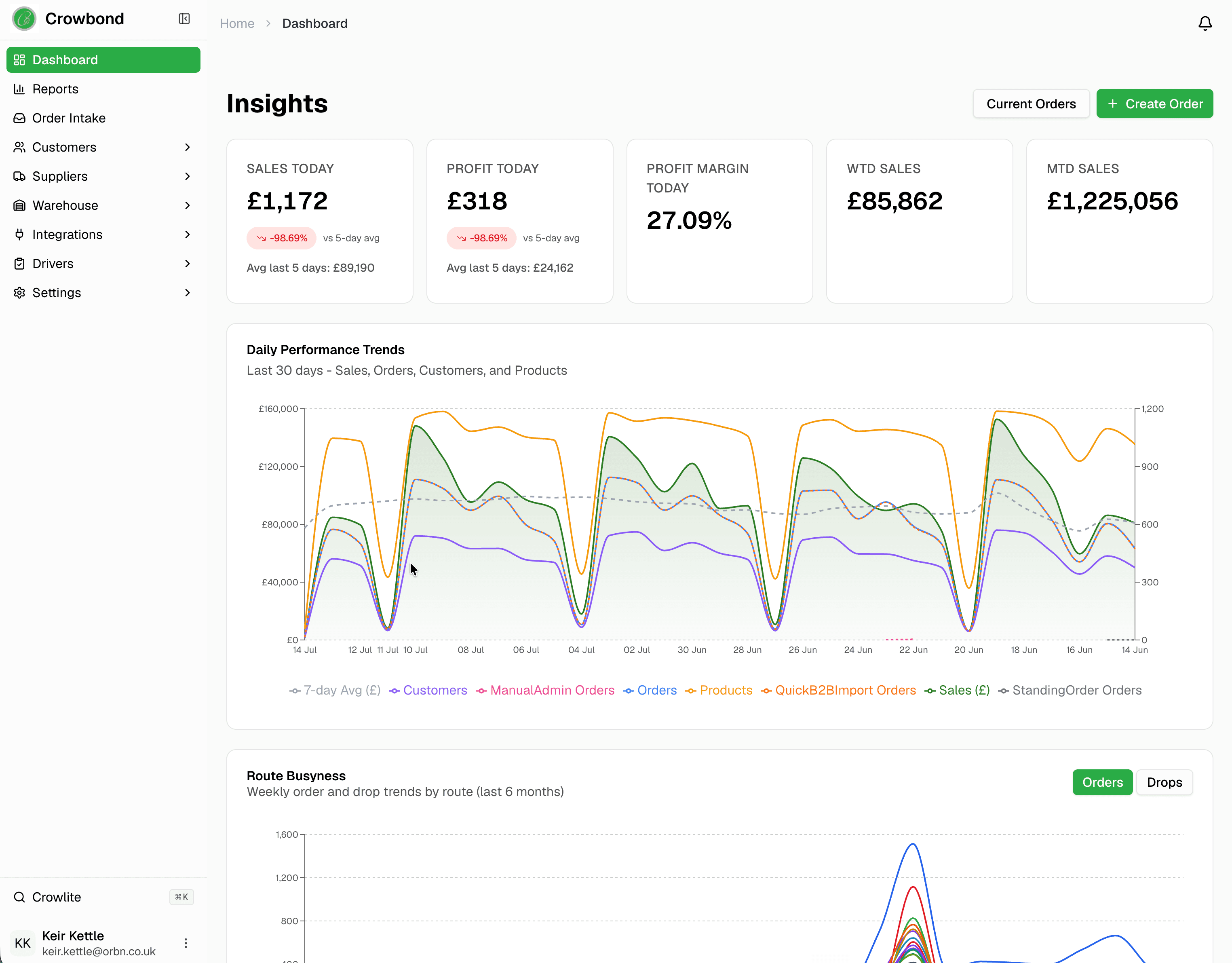
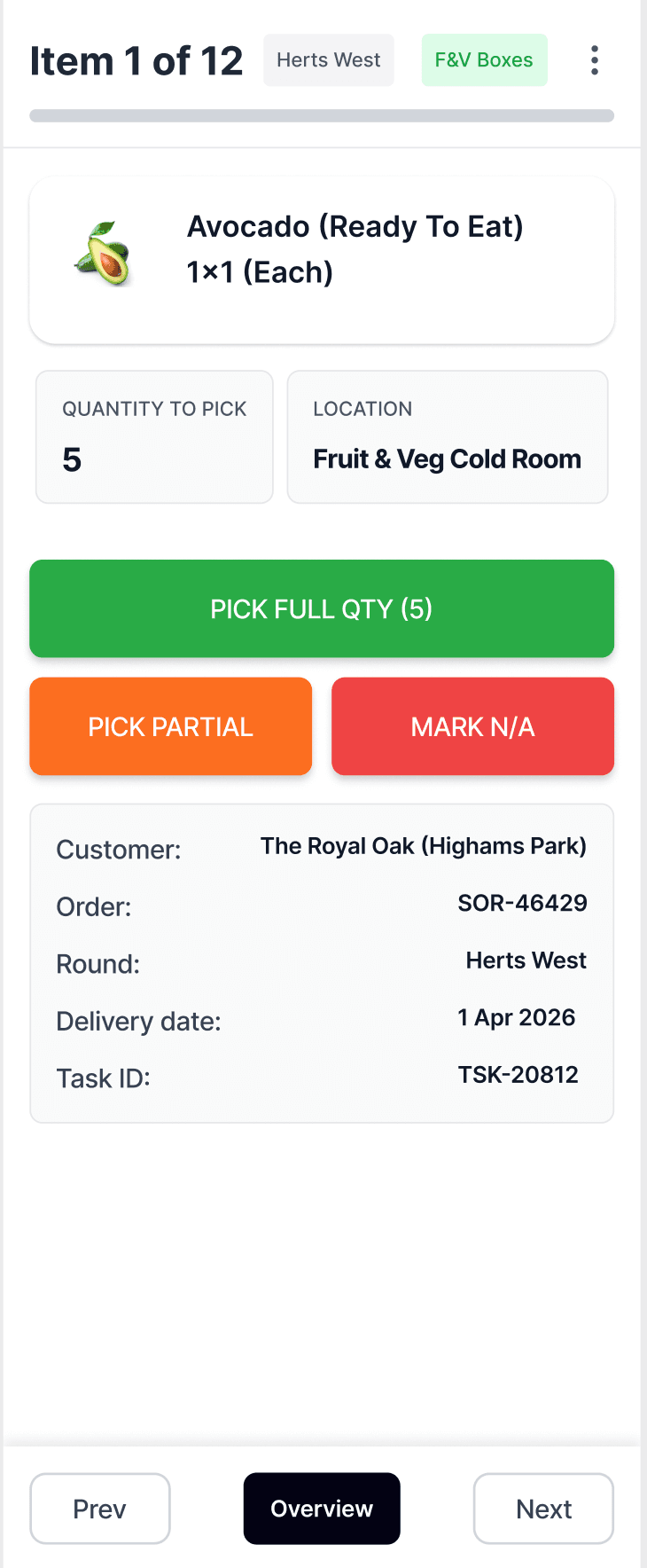
These results were reported for this engagement. Other projects will vary with the operation, workflow and starting point.
DeskBook combines timesheets, work in progress, project budgets and rate assumptions in a practice-management product for architects. Each morning, a plain-English briefing points to the jobs that need attention. Users can inspect the records behind it. The web app, data model and AI interaction all support that one workflow.
Explore AI automation and custom AI development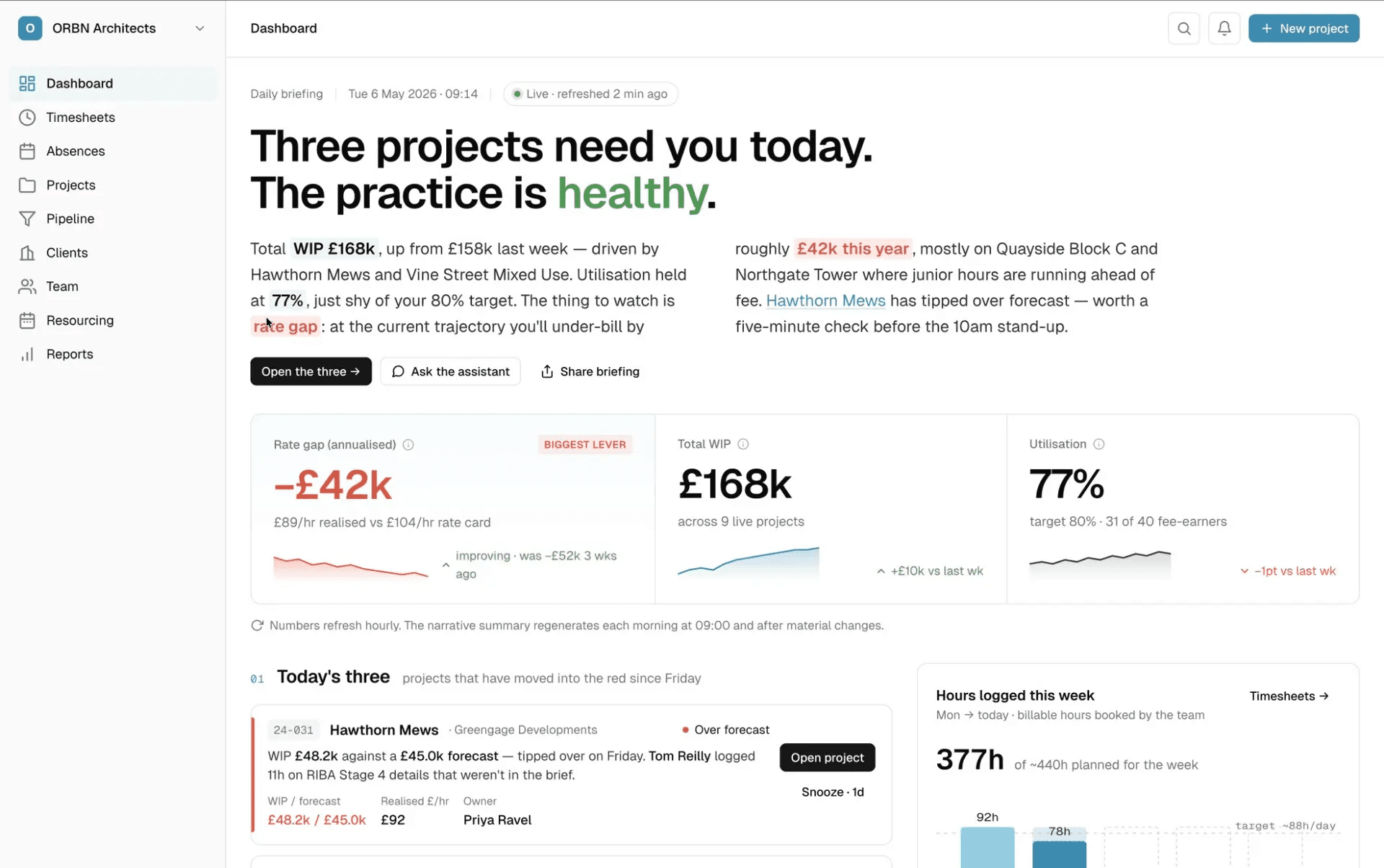
Custom software is built for one organisation, product or way of working. Unlike packaged software, it is not licensed to a broad market. A project can cover discovery, user research, prototypes, web or mobile development, integrations, data migration, security, testing, cloud infrastructure, release and ongoing support.
In the UK, bespoke software and custom software usually mean the same thing: software made for a particular need. What matters is whether a supplier will configure an existing product, extend or connect packaged systems, or build a new application that you own. A proposal should say exactly which approach it covers.
Custom software makes sense when a repeated workflow affects margin, capacity, service or risk, and packaged products leave an important gap. The organisation also needs the time and budget to own the product after launch. For standard business functions, buying or configuring a mature product is usually the better choice. Many businesses use packaged systems for common tasks and custom software for one distinctive workflow.
Cost depends on the team, timescale, integrations, data, migration, testing, environments, adoption and support. Feature count is only part of it. A useful proposal prices discovery, a focused first release, ongoing operation and contingency separately. ORBN’s UK cost estimator lets you change the team, rate, duration and risk assumptions instead of relying on one headline price.
A focused discovery or prototype can answer useful questions within weeks. A first production release may take several months, depending on the workflow, integrations, data migration, security, user research and support needs. The plan should show what the first useful release includes, which assumptions still need testing and what could change the timeline.
ORBN’s standard position is that the client owns the custom code and product-specific intellectual property created for the project, subject to the contract and any third-party or open-source components. We put the code, infrastructure definitions, documentation and access in environments the client controls. Every supplier agreement should spell out ownership, licences, credentials, data export and help with an exit.
Support needs to be agreed before launch. ORBN can run and improve the product, or hand it to an internal or third-party team. Either way, the product needs monitoring, alerts, incident handling, tested backups, security updates, runbooks, clear access ownership and a budget for cloud services, licences and future changes.
Usually, if the system provides a supported way in and you have the right access. Connections can use APIs, webhooks, events, EDI, secure files or a controlled wrapper around a legacy system. Discovery should confirm which system owns each record, how much data moves, what happens when a connection fails and what the vendor will support. We test the hardest connection early.
Yes. Procurement software can manage requisitions, supplier catalogues, approvals, purchase orders, receipts and exceptions around your controls. Booking software can manage availability, eligibility, pricing, payments, reminders and capacity. We first check whether a suitable product already exists, then build or connect only the part that needs a closer fit or more control.
Estimate the budget, compare custom and packaged software, read the full Crowbond case study or see how ORBN can help with cloud, strategy and technical leadership.
Edit team, rate, duration and risk assumptions and see what a proposal should include.
R/02Score fit, speed, integration, control, ownership and three-year economics.
R/03Work with ORBN from Great Barton for local discovery, process mapping and reviews.
R/04See the workflow, integration and reported operational result behind Crowlite.
R/05Design the AWS environment, release, recovery and operating model around a production application.
R/06Change the wider operational journey when process, people, data and several systems must move together.
R/07Align product, data, architecture, suppliers and investment before committing the software roadmap.
R/08Add accountable delivery, architecture and people leadership inside an active software team.
Bring the event, the commercial stakes and the people who understand the operation. We will help decide whether to change, buy, integrate, modernise or build.