Orders to route
Daily orders had to be grouped, mapped and allocated across the fleet before vehicles could leave the depot.
How a route optimisation tool integrated with Crowbond’s order system replaced a full working day of spreadsheets and manual planning — while cutting fleet costs by approximately 12.5%.
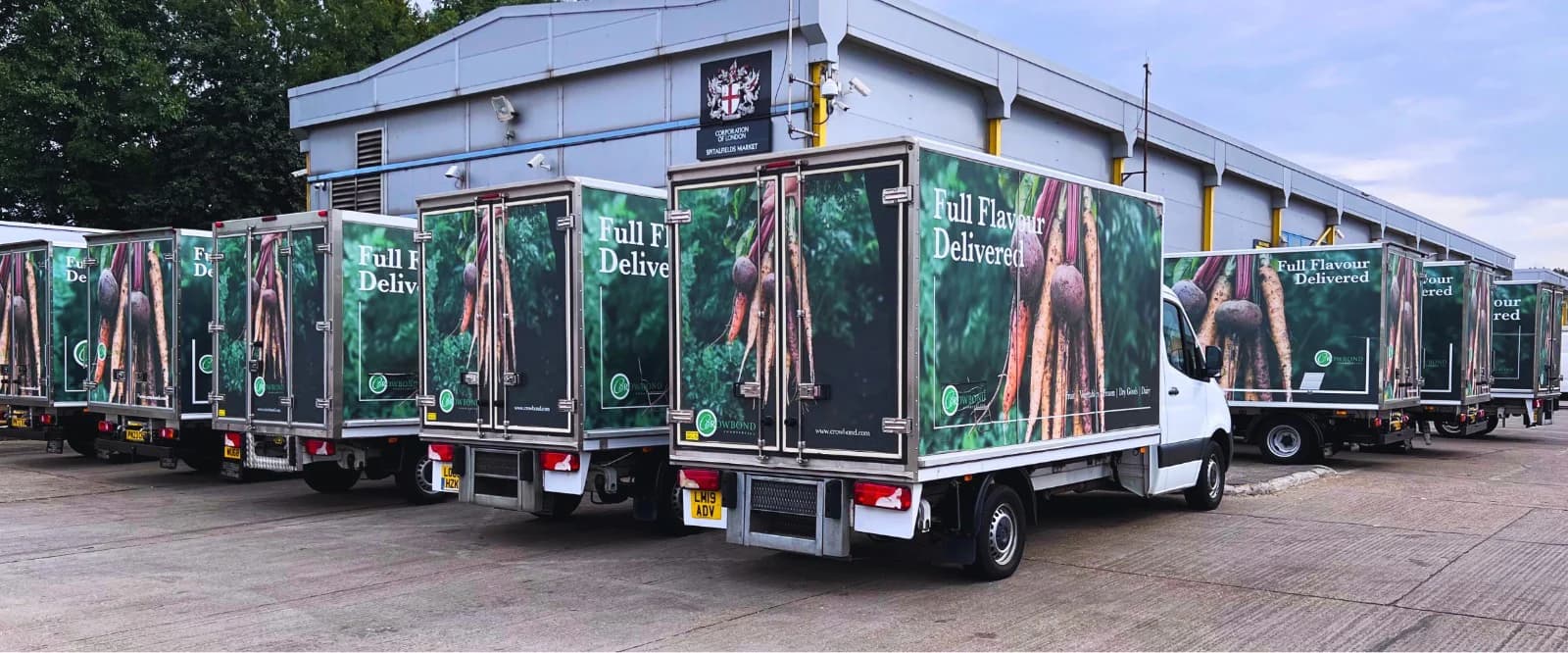
Daily orders had to be grouped, mapped and allocated across the fleet before vehicles could leave the depot.
A process that could consume a full working day became a short, reviewable planning step.
Routes were optimised for total distance while work was balanced across vehicle capacity and delivery volume.
The operational and fleet savings turned one fixed workflow into a significant recurring return.
Crowbond already had a custom warehouse system designed around its picking and checking workflows. The remaining bottleneck came after order intake: turning more than 200 orders into practical vehicle routes.
Daily order data left the order management system and entered a spreadsheet-based planning process.
A planner manually organised deliveries geographically and plotted them against Google Maps.
Orders were assigned while accounting for vehicle capacity, delivery volume and the practical knowledge held by the planning team.
The final plan remained vulnerable to spreadsheet errors and depended heavily on manual review.
An off-the-shelf logistics tool had been trialled, but its licence cost was high and it did not integrate properly with Crowbond’s order system.
A separate optimiser could calculate routes, but manual data movement meant it did not remove the operational bottleneck end to end.
ORBN built the missing workflow around Crowbond’s existing systems. Orders move directly from the OMS into a multi-vehicle optimiser, and planners keep the final judgement where local knowledge matters.
Orders are pulled from the system of record without a daily export, reformat and re-entry step.
Delivery addresses are geocoded consistently so every stop can enter the same planning model.
Google OR-Tools minimises overall travel while balancing capacity and volume across the fleet.
Planners can adjust the generated result for real-world constraints instead of fighting a closed black box.
The tool uses Crowbond’s established authentication, keeping the workflow secure and familiar.
Route planning is most valuable when it shares clean order data with the rest of the operation. Crowlite brings operational reporting and mobile warehouse workflows into that same connected environment.
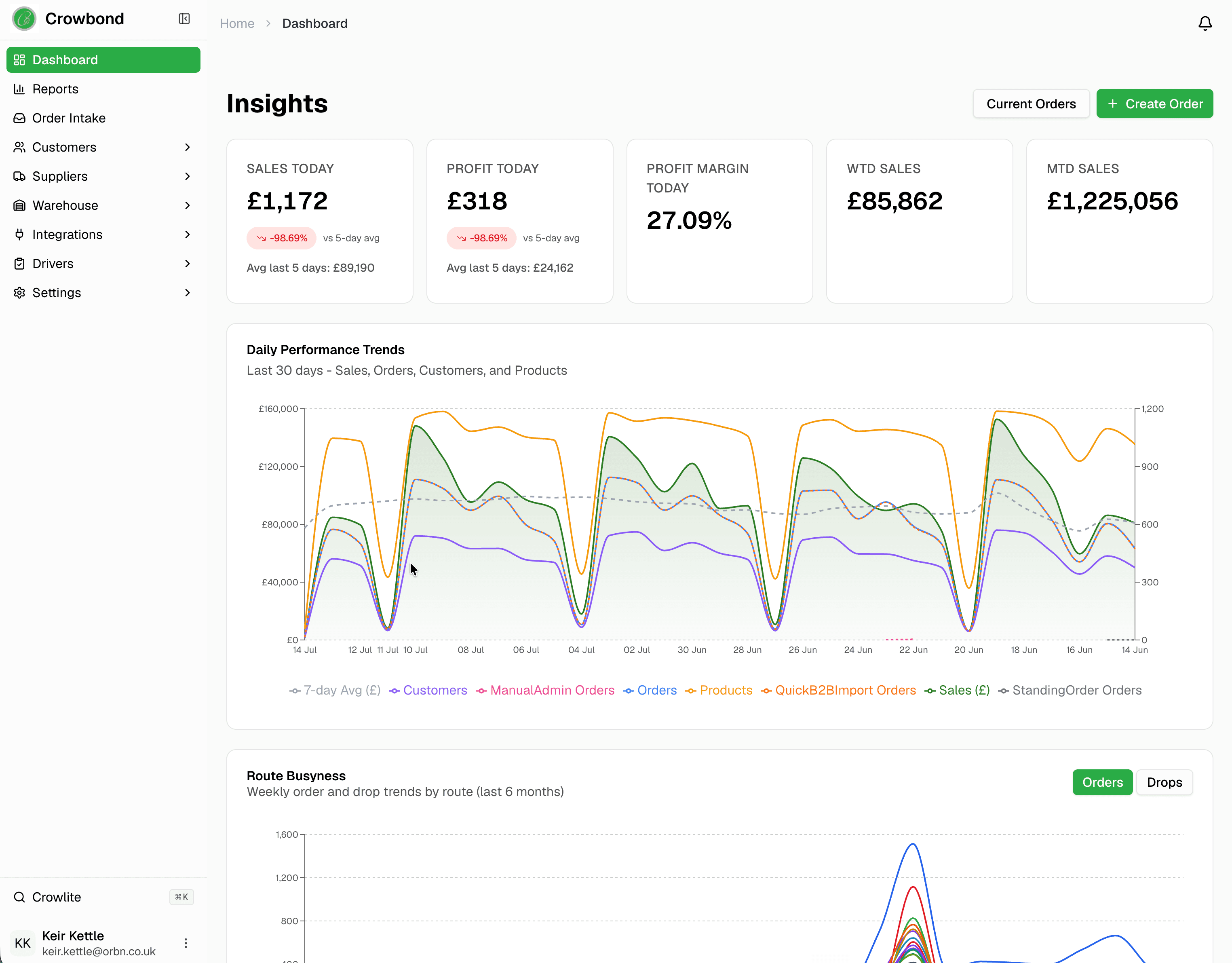
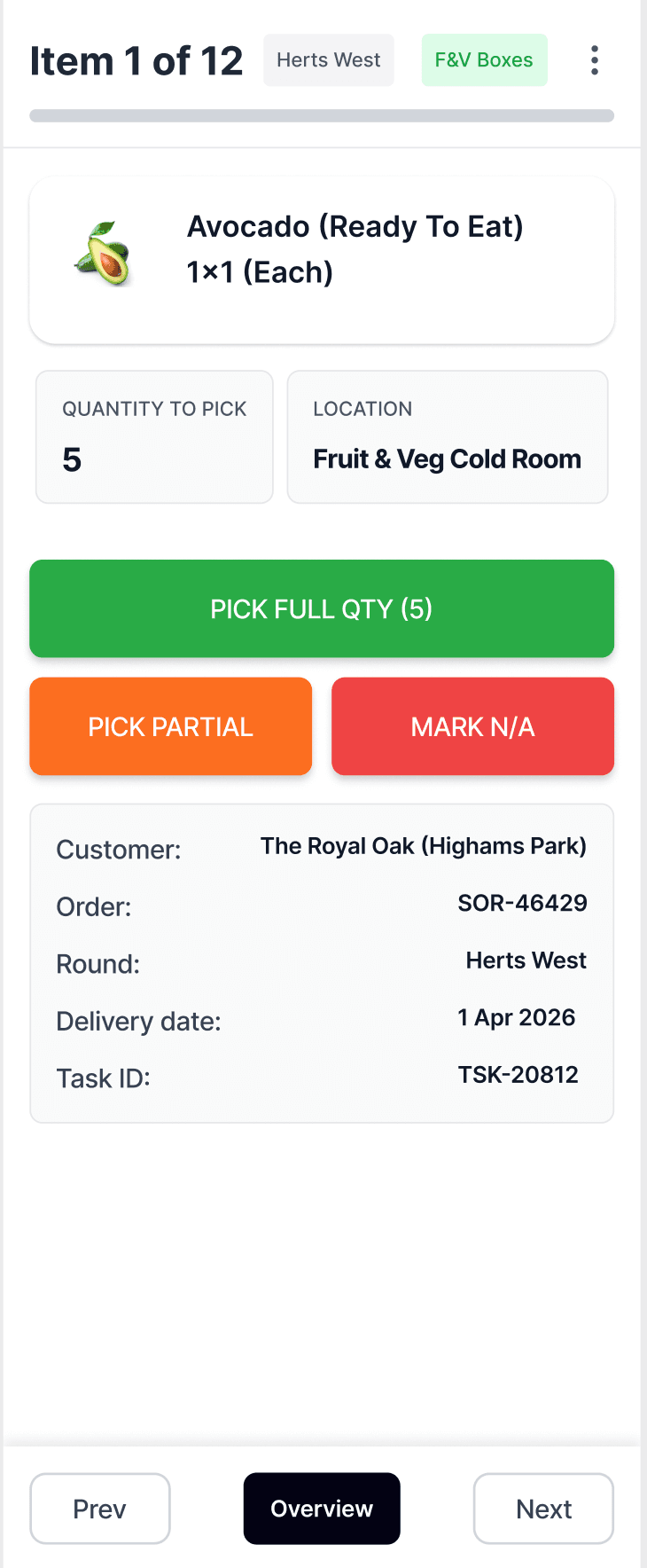
The generated plan needs little manual intervention, freeing the team from hours of repetitive route assembly.
Better route and workload decisions reduce the cost of serving the same delivery demand.
The reported saving repeats because the software removes cost from a process that happens every working day.
Planning logic is encoded into a repeatable system while manual control remains available for exceptions.
“ORBN Digital cut our delivery planning from 8 hours to 20 minutes — and saved us £36k per year.”
Results reported for this engagement. Outcomes vary with each operation, workflow and starting point.
See how rising demand turns informal coordination into a systems decision.
D/05Trace repeated work and late decisions back to the commercial outcome.
R/01See how ordering, ERP, warehouse, delivery and reporting work as one system.
R/02Remove rekeying and connect stock, orders and fulfilment in real time.
R/03Connect customer ordering and account pricing directly to the operation.
R/04Decide whether to replace a system, integrate what works or build the missing workflow.
R/05Test the team, duration, rate and risk assumptions behind a UK software budget.
R/06Score whether buying, integrating or building is the stronger operational decision.
R/07Scope one data flow, compare API, EDI and event patterns, and design accountable failure handling.
R/08See how ORBN automated manual order processing so about 400 daily orders now take one reviewer roughly a third of their day, down from a team of three.
R/09Turn a constrained operational journey into a working change with adoption and measurable benefits included.
R/10Compare retain, buy, integrate and build options and sequence investment around evidence and whole-life cost.
Crowbond did not need generic workflow automation. Growth exposed a specific constraint with a measurable commercial cost. Bring the event, the stakes and the people who understand yours.